


During the summer the sun gives us a warm embrace that brings great benefits to our health. Our skin looks more vital, the sun stimulates our body's immunity, improves the quality of our sleep and has an impact on our mood: it makes us feel more cheerful and active.
But we need to be aware that excessive or inappropriate sunbathing can be dangerous. Ultraviolet rays can cause skin cancer, dark spots and sun scars.
In today's post we want to help you make sunbathing beneficial for your skin, for your body... advising you on how to take them.
For a healthy and beautiful tan
- Don't spend long hours in the sun every day. 20-25 minutes three or four times a week is enough. Dermatologists recommend gradually increasing the exposure time (10, 15, 20 minutes).
- Also, don't just sunbathe lying on the sand: you should combine sunbathing with moving around in the sun, exercising, walking... These are basic tips to make sunbathing a real wellness bath.
- With every exposure to the sun you allow your skin to create a pigment called melanin which absorbs light rays while giving your skin a golden hue. The darker your skin naturally is, the more melanin you have and the better protected you are from the sun.
- The best times to sunbathe are before eight in the morning and after four in the afternoon. Even at these times when the rays do not fall with much force, you should protect yourself by taking the measures we recommend below.
Choosing the right sunscreen for your skin
The sunscreen is a must-have product during the summer.
The cosmetics industry has evolved a great deal in the effectiveness and coverage offered by sunscreens. The evolution of the sector is also noticeable in the almost incomprehensible lexicon they offer on the packaging about SPF, coverage, screens...
That's why we explain some valuable information that will help you choose the most appropriate sunscreen for your skin. skin care according to their type.
Types of sunscreen
There are two types of sunscreens: chemical or organic and physical or inorganic.
The chemical or organic sunscreens are those that absorb sunlight through a chemical reaction. They should be applied 30 minutes before exposure to allow time for proper absorption.
On the other hand, the physical or inorganic photoprotectors are inert substances which, when applied to the skin, reflect sunlight as if they were a mirror, hence the name "sunscreen". They leave a thin whitish layer on the skin which generally does not disappear on contact with water. Sunscreens rarely cause allergic reactions and are very suitable for sun protection for children.
A total screen filter protects against UVA, UVB, UVC (shortwave ultraviolet) and IR (thermal radiation), regardless of the type of sunlight. protection factor to each of these radiations.
The language of the protection factor
Sunscreens have different levels of sun protection factors (SPF) and range from 2 to 100 SPF.
The FPS measures the protective capacity of a filter against the harmful effects of solar radiation and indicates how long the skin can be exposed to the sun without reddening or burning.
For example, a sunscreen product that offers a protection factor of 15 means that the skin can be exposed to UVB rays 15 times longer. If your skin is very white and burns in 10 minutes, when you wear sunscreen 15, the time it takes to burn instead of 10 minutes becomes 150 minutes.
In other words, the more SPF, the longer you can stay in the sun. This is only an approximate figure that can be altered by the thickness of the layer you apply, whether you apply it on wet or dry skin, if you have a lot of perspiration, it depends on the intensity and characteristics of the radiation and the type of skin.
What is the best sunscreen for you?
For the dry skins photoprotective creams that also moisturise and nourish on a cosmetic level are perfect. In this way you give the skin a complementary treatment that facilitates the absorption of the active ingredients of the sunscreen.
In the case of OILY SKINS and seborrhoeic or acne-prone skin, gels and solutions that do not contain a greasy excipient are ideal, otherwise skin conditions can become much worse.
Sunscreens come in many different forms. In dermo-pharmacies and cosmetic shops you will find creams, milks, lotions, gels, sprays, make-up with SPF and the very useful lipsticks to carry with you in your handbag everywhere you go.
We are carelessly prone to protect the skin on our backs, necks and limbs, but sometimes we forget the sensitivity of our lips - they dry out and crack so easily!
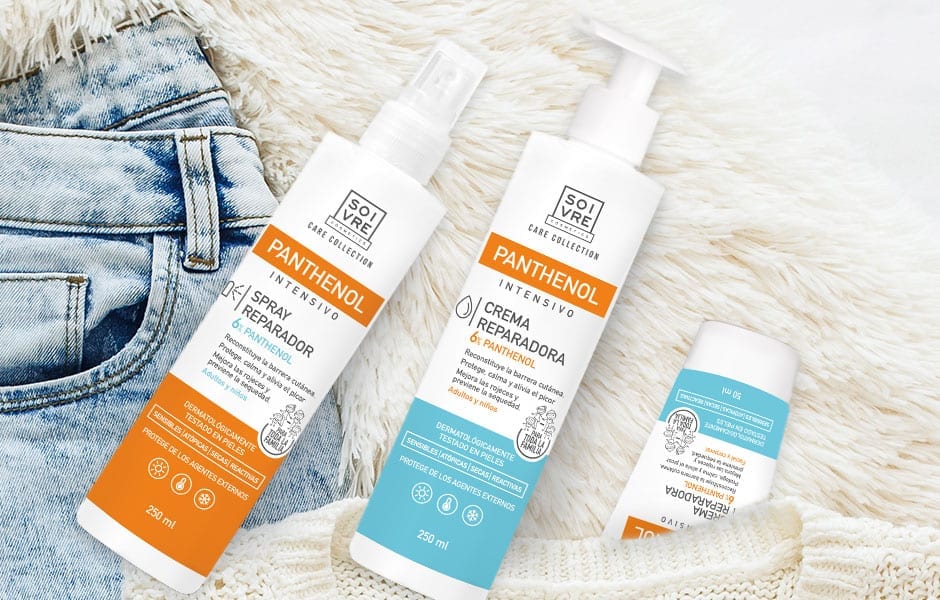
At Soivre Cosmetics we have solutions to protect the skin during and after sun exposure.
And after the sun, take care of your skin with soothing and moisturising products.
And when night falls after a day at the beach, we must take extra care of our skin. After sunbathing, we recommend a cold shower without surfactant soaps. It is also forbidden to exfoliate or use exfoliating accessories such as horsehair gloves or intense cleansers.
Remember that your skin is more vulnerable than ever after so much air, chlorine, salt, sun and rubbing against your swimming costume?
Immediately after a cold shower, be generous and apply a moisturising cream that includes Vitamin C or a soothing gel with aloe vera. This restores the water balance in the epidermis and reduces irritation.
For example, in Soivre we have the perfect products for pampering the skin after sun exposure. Some include aloe vera and others hyaluronic acid.
On the face, neck and hands use creams or lotions. serums with an antioxidant effect. Yes, Vitamin C and E again, as they work by fighting the free radicals that cause ageing.
And to finish off the skin treatment after sun exposure, don't forget the hydration from within: A fruit or vegetable juice is the perfect way to bring the curtain down after a long day in the sun. Mixing equal parts carrot juice and orange juice with a teaspoon of honey and a cube of ginger, for example, is an ideal drink for internal hydration.
The next morning, take time in front of the mirror to explore the changes in your body. If you notice any new spots or a growing mole or burn, it is best to consult a dermatologist.
Tanned skin is a sign of beauty today, but more important than the colour of the skin is that it remains healthy. In the long term, excessive exposure to the sun causes premature ageing, so enjoy sunbathing, but with great caution.
If you have any questions, don't hesitate to comment here - we'll be happy to help! :-)